

Difficult conversations are inevitable and everyone has to deal with them in a professional or personal context. The most challenging part of these situations is not only bringing up the matter but also controlling your feelings. In situations where someone gets angry, the conflict might escalate, the relationship may suffer, and the trust might even disappear. Anger No More is of the opinion that the ability to deal with such conversations is a major factor in one’s growth both personally and professionally. Through this guide you will learn how to get through these hard talks without losing your cool.
Why Difficult Conversations Are Essential
Difficult Conversations often involve sensitive topics like feedback, conflicts, or disagreements. Avoiding them can lead to:
- Misunderstandings and resentment
- Reduced productivity at work
- Strained personal relationships
- Missed opportunities for growth
Addressing these conversations calmly allows you to build respect and credibility, and when combined with ADHD Anger Treatment, it can help manage emotional responses even in challenging situations.
Common Challenges During Difficult Conversations
Fear of confrontation – Many people avoid discussions to escape tension.
Emotional triggers – Certain topics can quickly lead to anger.
Lack of preparation – Entering a conversation unprepared increases stress.
Miscommunication – Misunderstood words can escalate conflicts.
Tips for Managing Emotions and Avoiding Losing Your Temper
Keeping your emotions in check is crucial during any difficult conversation. Here are actionable strategies:
Pause and breathe – Take a moment before responding to stay calm.
Focus on facts, not feelings – Address behavior or issues, not personal attacks.
Listen actively – Understanding the other person’s perspective prevents defensive reactions.
Set boundaries – Stay respectful and assertive without being aggressive.
Practice self-awareness – Recognize triggers that make you angry.
These strategies align with Tips for Difficult Conversations and Anger Control, ensuring you communicate effectively while maintaining composure.
Step-by-Step Approach to Difficult Conversations
1. Prepare in Advance
- Identify the main point of the discussion.
- Anticipate potential reactions and plan responses.
- Decide on a neutral location for the conversation.
2. Start Calmly and Positively
- Open with acknowledgment of the other person’s perspective.
- Express your intention to find a solution, not to blame.
3. Use “I” Statements
- Say “I feel” instead of “You always,” reducing defensiveness.
- Focus on your experience rather than attacking.
4. Listen and Clarify
- Repeat back key points to show understanding.
- Ask clarifying questions instead of assuming.
5. End with Actionable Outcomes
- Agree on next steps and responsibilities.
- Confirm mutual understanding to prevent future conflicts.
Comparing Losing Your Temper Versus Staying Calm
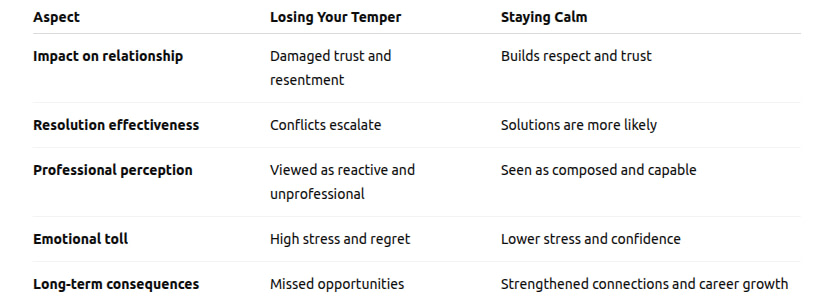
This comparison clearly shows why controlling your anger is vital during difficult conversations.
Practical Examples
Scenario 1: Feedback to a colleague
- Losing Your Temper: “You always mess this up!” → Causes defensiveness
- Staying calm: “I noticed the report had some errors. Let’s review it together.” → Encourages collaboration
Scenario 2: Addressing a personal conflict
- Losing your temper: Yelling or interrupting → Escalates tension
- Staying calm: Expressing feelings with “I” statements → Opens dialogue
Tips for Difficult Conversations and Anger Control
Here are actionable tips compiled from the principles above:
Recognize triggers early – Know what topics or behaviors make you angry.
Practice mindfulness techniques – Breathing exercises or short pauses help maintain calm.
Role-play conversations – Practicing can reduce anxiety and emotional reactions.
Set clear objectives – Know what outcome you want before starting the conversation.
Seek feedback after – Reflect on what went well and what could improve.
These steps, recommended by Anger No More, are proven to reduce the likelihood of losing your temper.
Frequently Asked Questions (FAQ)
Q1: Can difficult conversations improve relationships?
Yes, addressing issues calmly and respectfully can strengthen trust and understanding.
Q2: How do I stop myself from losing my temper instantly?
Pause, breathe deeply, and focus on facts instead of emotions. Practicing mindfulness helps over time.
Q3: What if the other person becomes angry?
Stay calm, listen actively, and avoid matching their anger. Redirect the conversation to solutions.
Q4: How can I prepare for a particularly stressful conversation?
Plan your key points, anticipate reactions, and choose a neutral environment. Practicing “I” statements is very effective.
Conclusion
Difficult conversations are inevitable, but losing your temper is not. By using the strategies outlined by Anger No More, you can address sensitive topics with confidence, maintain strong relationships, and achieve positive outcomes. Applying Tips for difficult conversations and anger control ensures that your communication remains effective and respectful, making you a more resilient and trusted individual both personally and professionally.
